
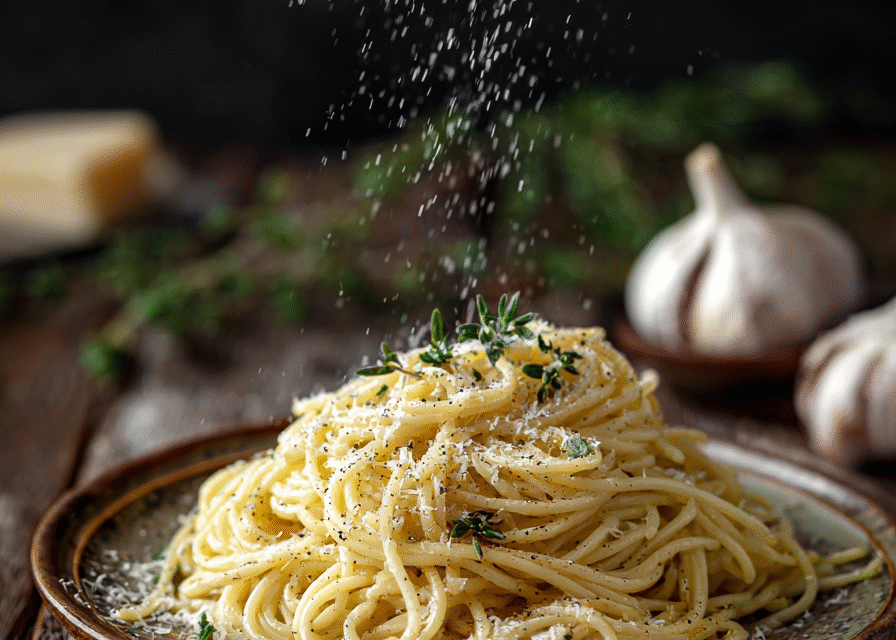
If you keep Parmesan in your fridge but can never find decent Pecorino at the store, this version solves that problem without sacrificing the silky texture or bold pepper flavor that makes this dish special.
📋 In This Article
Why You’ll Love This Cacio e Pepe Recipe
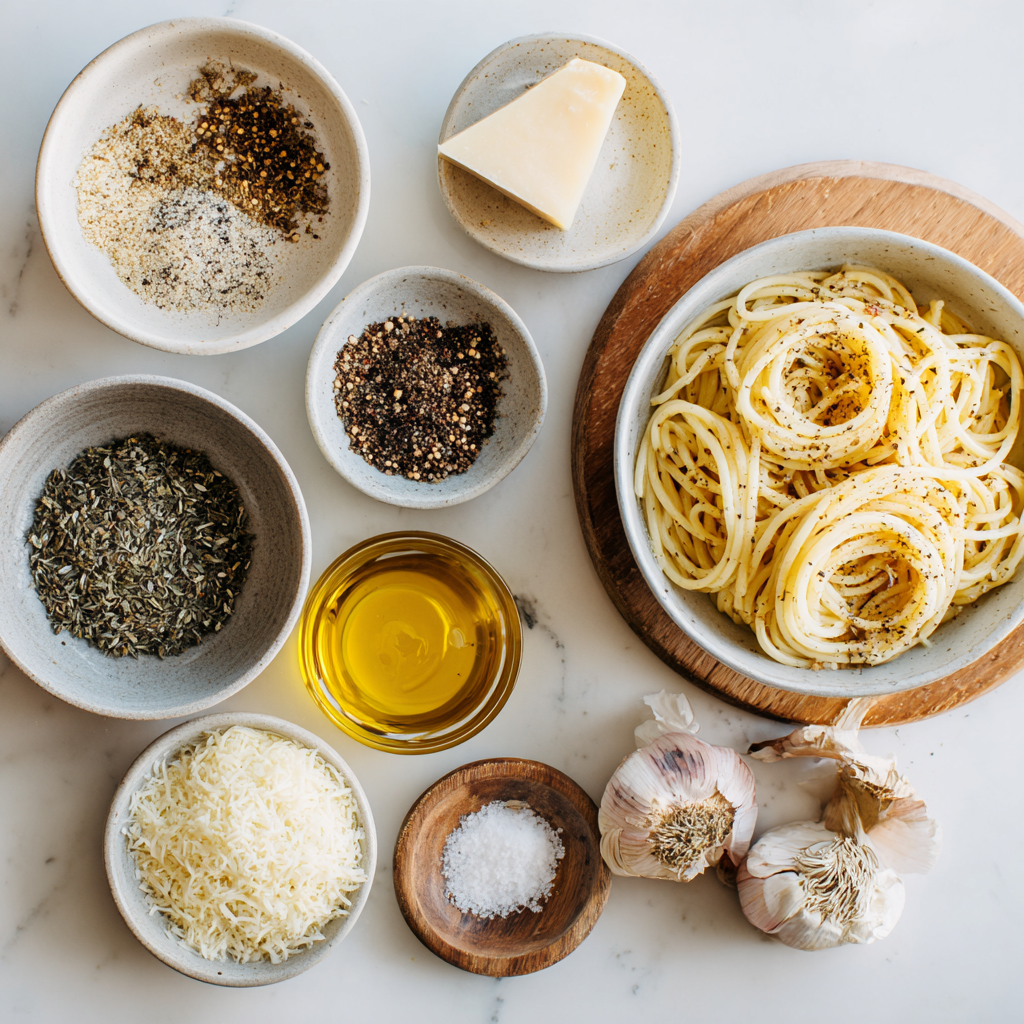
Five ingredients, one pot, fifteen minutes—that’s the whole commitment. No chopping vegetables, no complicated prep, and definitely no hunting through three grocery stores for imported cheese.
The Parmesan you already have works beautifully once you understand the technique. That glossy, peppery sauce happens without cream or butter, just smart use of pasta water and constant motion.
This hits the same comfort spot as fancier versions but fits into a regular Tuesday night. The toasted black pepper gives you that warm spice, and freshly grated Parmesan brings nutty richness that coats every strand.
Why This Recipe Works
Traditional Cacio e Pepe uses just three ingredients: pasta, Pecorino Romano, and black pepper. This version swaps Pecorino for Parmesan while keeping the technique that makes the dish work.
The Science Behind the Creamy Sauce
When finely grated cheese meets hot starchy pasta water at the right temperature, the starches act as an emulsifier. They help the fat from cheese blend smoothly with water instead of separating into greasy clumps.
Tossing hot pasta with this mixture creates a silky coating that clings to each noodle. No cream, no butter, no flour—just the right temperature and constant motion.
If the mixture sits still or gets too hot, the cheese seizes up and turns grainy. That’s why technique matters more than fancy ingredients here.
Why Parmesan Works as a Pecorino Substitute
Pecorino Romano brings sharp, salty, funky sheep’s milk flavor. Parmesan is milder and nuttier from cow’s milk, but it melts just as well when handled properly.
Good Parmesan—real Parmigiano-Reggiano—has enough fat and protein to create that glossy emulsion. The flavor is gentler and more buttery than assertive Pecorino, but still deeply satisfying.
What You’ll Need
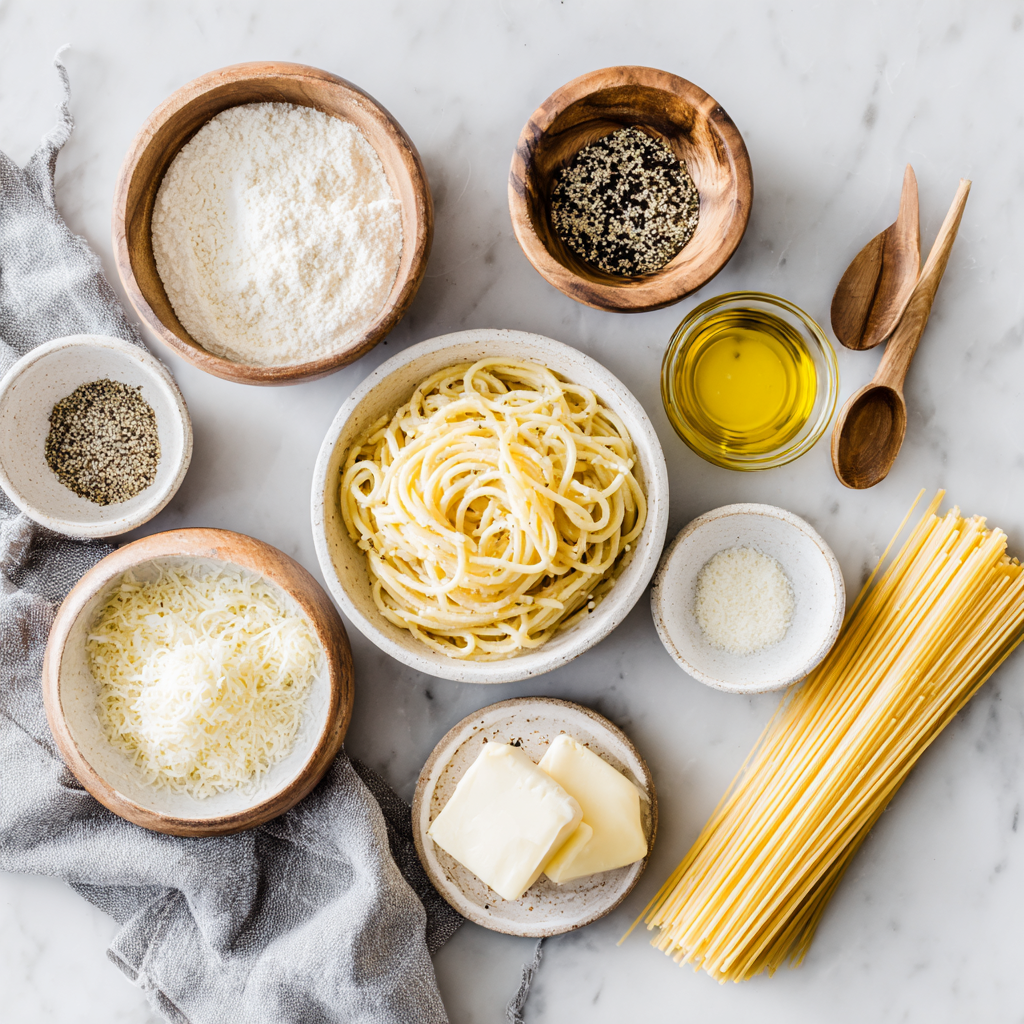
Essential Ingredients
For two generous servings:
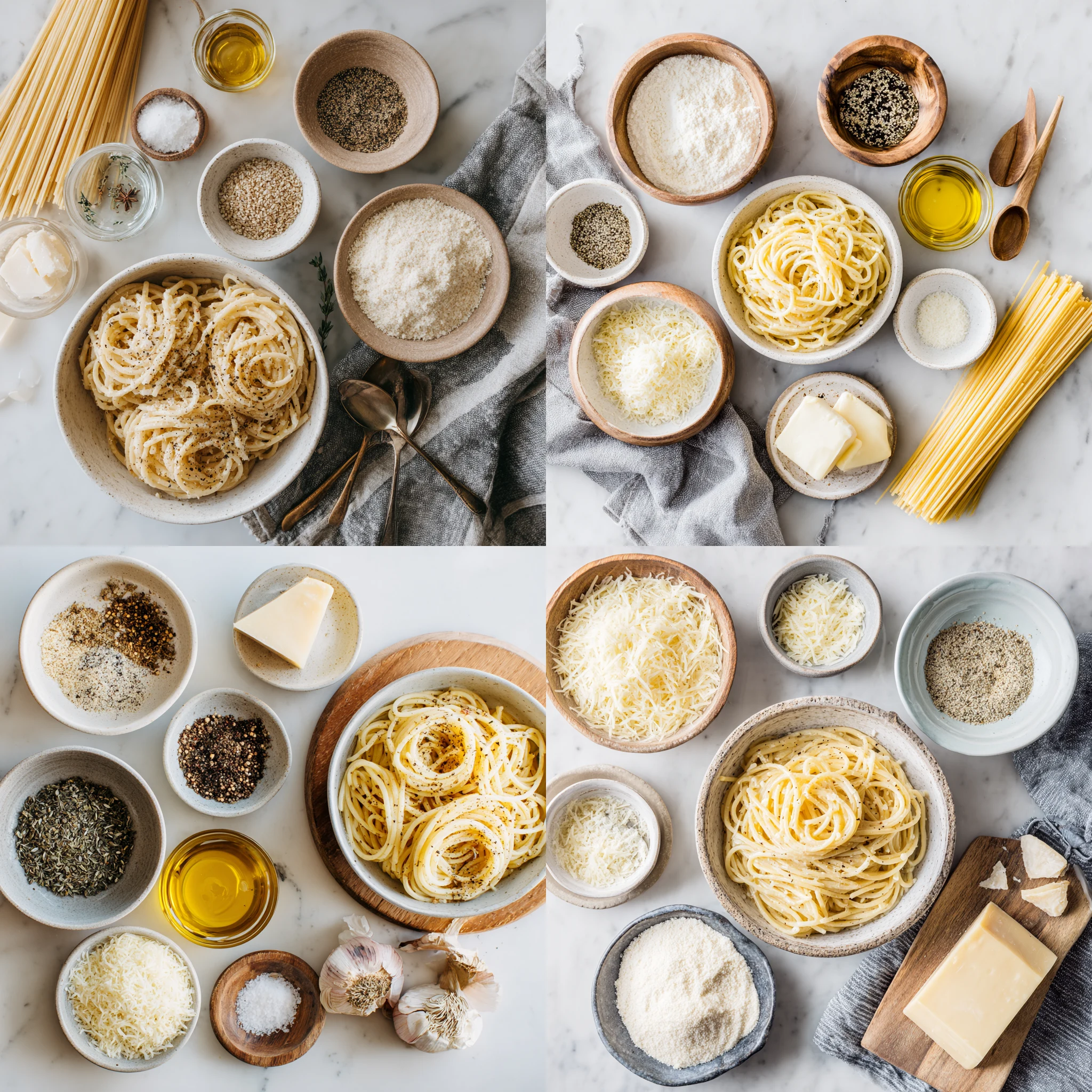
- 8 ounces dried pasta (spaghetti, tonnarelli, or bucatini)
- 2 cups finely grated Parmesan cheese (about 4 ounces by weight)
- 2 tablespoons whole black peppercorns
- Salt for pasta water
- Reserved pasta cooking water (at least 2 cups)
Ingredient Notes and Quality Tips
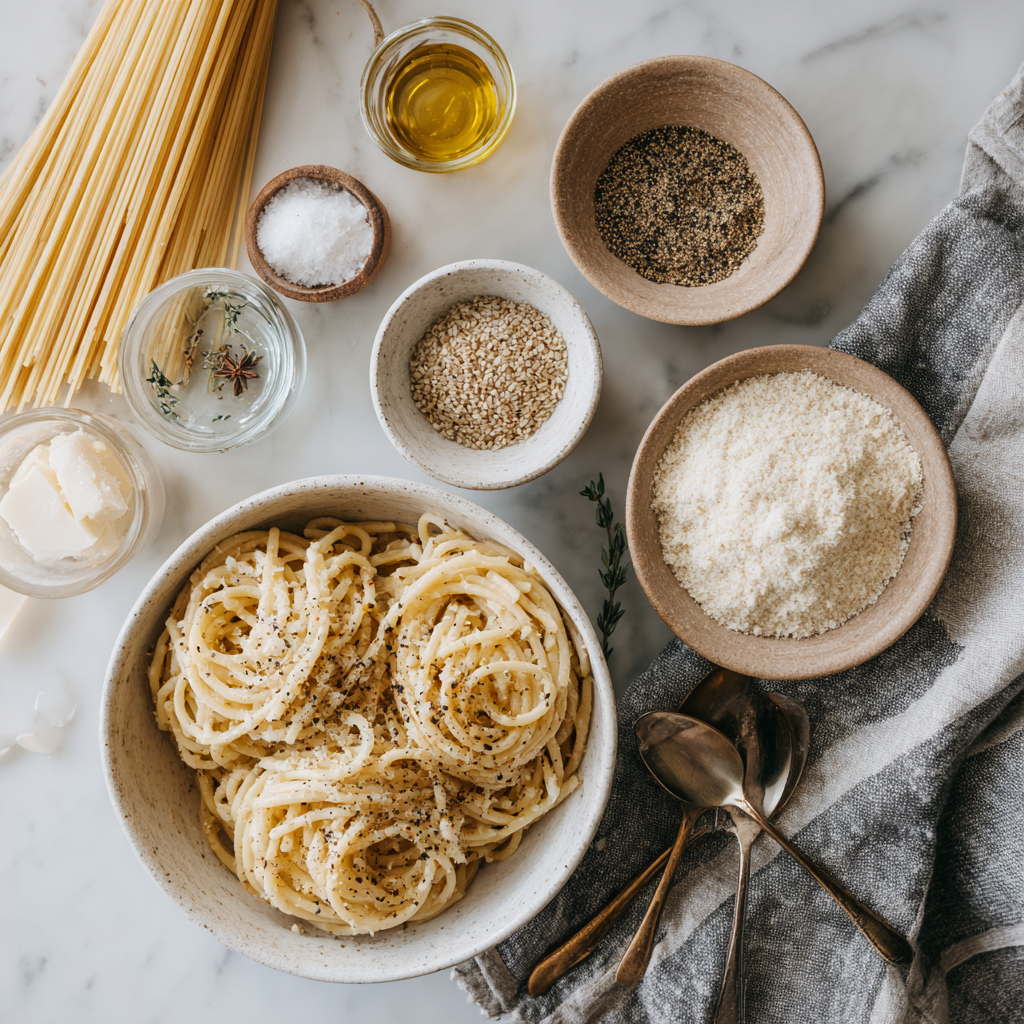
Buy a block of real Parmigiano-Reggiano and grate it yourself right before cooking. Pre-grated cheese contains cellulose to prevent clumping, which interferes with the smooth sauce you’re building.
Use a microplane or the finest holes on your box grater. Finer cheese melts faster and more evenly. Coarse shreds won’t dissolve properly and you’ll end up with stringy bits.
Whole black peppercorns give you control over coarseness and release more aromatic oils when toasted. Pre-ground pepper works in a pinch but loses some of that fresh, floral spice.
For pasta, long shapes work best because they hold sauce well. Spaghetti is easiest to find. Tonnarelli is traditional but harder to source. Bucatini adds fun with its hollow center.
For another simple pasta approach using similar techniques, try this lemon butter pasta from Serious Eats.
Equipment Required
- Large pot for boiling pasta
- 12-inch skillet or sauté pan
- Microplane or fine grater
- Measuring cups and ladle
- Tongs for tossing pasta
- Mortar and pestle or small skillet for toasting pepper
How to Make Cacio e Pepe Step by Step
Read through all the steps before you start so you know what’s coming. Timing matters here.
Step 1: Prepare Your Ingredients and Workspace
Before turning on the stove, grate all your Parmesan into a medium bowl. Have your peppercorns ready to toast, and set out a ladle and tongs near the stove.
Put a large pot of water on to boil and salt it generously—about 2 tablespoons of kosher salt for 4 quarts of water. It should taste like seawater.
Step 2: Toast the Black Pepper
While water heats, toast your peppercorns in a dry skillet over medium heat for about 2 minutes, shaking the pan occasionally. You’ll smell them when they’re ready—the aroma becomes noticeably more fragrant.
Transfer toasted peppercorns to a mortar and pestle and crack them coarsely. You want a mix of fine powder and visible chunks, not dust.
No mortar and pestle? Put peppercorns in a ziplock bag and whack them with a heavy pan or rolling pin.
Step 3: Cook the Pasta to Perfect Al Dente
Drop pasta into boiling water and set a timer for 2 minutes less than package directions suggest. For most dried spaghetti, this means about 8 minutes.
Before draining anything, scoop out at least 2 cups of pasta water with a measuring cup or ladle. This starchy liquid is crucial—don’t skip it.
The pasta should be just shy of al dente when you pull it. It’ll finish cooking in the pan with sauce.
Step 4: Create the Cheese Paste
While pasta cooks, add about half a cup of hot pasta water to your bowl of grated Parmesan. Stir vigorously with a fork until you have a thick, smooth paste.
It should look like thick pancake batter—not soupy, but not stiff either. This step starts the emulsification process in a controlled way so the cheese doesn’t seize when it hits hot pasta.
Step 5: Combine Pasta with Pepper and Pasta Water
Heat your skillet over medium heat and add about two-thirds of the toasted pepper. Let it sizzle for 30 seconds.
Add about a cup of pasta water to the skillet with the pepper. This creates a peppery broth.
Use tongs to transfer pasta directly from pot to skillet. Toss everything together for about a minute.
Step 6: Add the Cheese and Emulsify the Sauce
Turn heat down to low. This is critical—if the pan is too hot, cheese will break and turn greasy.
Add your cheese paste to the pasta and start tossing constantly with tongs, lifting and turning noodles so every strand gets coated. The sauce will look tight at first.
Add more pasta water a few tablespoons at a time as you toss, until sauce becomes glossy and coats pasta like silk. This takes about 2 minutes of constant motion.
The sauce should cling to pasta but still look slightly loose in the pan. It’ll thicken as it sits.
Step 7: Adjust Consistency and Serve Immediately
If sauce looks too thick, add another splash of pasta water and toss again. If it’s too thin, keep tossing over low heat for another 30 seconds to let it tighten up.
Plate immediately, finishing each portion with a sprinkle of remaining toasted pepper and a little extra grated Parmesan if you like.
Serve straight from pan to plate to table. This dish doesn’t wait.
Expert Tips and Common Mistakes to Avoid
This dish is simple but not always easy. Here’s what makes the difference between success and scrambled cheese.
Temperature Control Is Critical
The biggest mistake is adding cheese to a pan that’s too hot. High heat causes cheese proteins to seize up and separate from fat, leaving you with a greasy, grainy mess.
Once your pasta is in the skillet with pepper and water, turn heat to low before adding cheese paste. You want the pan warm enough to keep everything fluid, but not so hot it scrambles the cheese.
If your sauce does break, add a few tablespoons of cold pasta water and whisk vigorously off the heat. The temperature drop and extra starch can sometimes bring it back together.
Don’t Skip the Pasta Water
Pasta water isn’t just salty water—it’s loaded with starch released from noodles as they cook. That starch acts like a natural emulsifier, helping fat and water combine into cohesive sauce.
Always save more than you think you’ll need. Plain tap water doesn’t work the same way.
Avoiding Clumpy or Grainy Cheese
Clumps usually happen because cheese wasn’t grated fine enough or because it hit the pan at too high a temperature.
Making that cheese paste with pasta water before adding it to the skillet gives you a head start on emulsification and helps prevent clumping.
Constant motion also matters. If you stop tossing, cheese can settle and seize. Keep those tongs moving.
The Right Pasta-to-Cheese Ratio
More cheese isn’t always better. Too much makes sauce thick and heavy instead of silky and clingy.
For 8 ounces of pasta, 2 cups of finely grated Parmesan (about 4 ounces by weight) is the sweet spot. You can adjust slightly based on preference, but don’t double it.
Variations and Substitutions
Once you’ve mastered the basic technique, you can play around a little.
Other Cheese Options Beyond Parmesan
If you can find good Pecorino Romano, use it. You’ll get that traditional sharp, salty flavor. Just follow the same method.
A blend of half Parmesan and half Pecorino gives you a nice middle ground—some nuttiness of Parmesan with the punch of Pecorino.
Grana Padano is another option close to Parmesan in texture and melting properties. It’s milder and often less expensive.
Avoid soft cheeses like mozzarella or fontina—they have too much moisture and won’t create the right texture.
Pasta Shape Alternatives
Long pasta works best, but rigatoni and penne can work when that’s what you have on hand. The sauce doesn’t coat quite as evenly, but it’s still good.
If you’re using fresh pasta instead of dried, reduce cooking time significantly and save even more pasta water—fresh pasta releases less starch.
Adding Protein or Vegetables
Leftover shredded rotisserie chicken or crispy pancetta adds protein when you want something more substantial.
Blanched peas or asparagus tips can make this feel more like a complete meal, especially in spring. Just toss them in during the last minute of pasta cooking.
Keep additions simple. This isn’t meant to be complicated. For something with more elements, check out Bon Appétit’s pasta with burst tomatoes.
How to Store and Reheat
Storage Guidelines
Store leftovers in an airtight container in the fridge for up to 2 days. The sauce will thicken and lose some of its silky texture as it cools.
Don’t freeze this dish. The emulsion breaks down when frozen and reheated, leaving you with dry pasta and separated cheese.
Best Reheating Methods
Reheat gently in a skillet over low heat with a few tablespoons of water or milk. Toss constantly until the sauce loosens and coats the pasta again.
Microwave reheating works in a pinch. Add a splash of water, cover loosely, and heat in 30-second intervals, stirring between each one.
The texture won’t be quite as good as fresh, but you can get close with gentle heat and added moisture.
Frequently Asked Questions
Can I make Cacio e Pepe ahead of time?
Not really. The sauce loses its silky texture as it sits and doesn’t reheat perfectly. You can grate the cheese and toast the pepper ahead, but cook the pasta and build the sauce right before serving for best results.
What if my sauce breaks or becomes clumpy?
If the sauce breaks, remove the pan from heat immediately and add 2-3 tablespoons of cold pasta water. Whisk vigorously to bring the emulsion back together. If cheese is clumpy, the pan was probably too hot—lower the heat and keep tossing with more pasta water added gradually.
Can I use pre-grated Parmesan cheese?
Pre-grated cheese contains anti-caking agents that interfere with the smooth emulsion you’re trying to create. It won’t melt as smoothly and you’ll likely end up with a grainy texture. Grate a block of Parmesan yourself for best results—it only takes a few minutes.
Conclusion
This Cacio e Pepe recipe proves you don’t need specialty cheese or restaurant training to make silky, peppery Roman pasta at home. With Parmesan, good technique, and 15 minutes, you can have a satisfying dinner that tastes like you spent way more time on it.
The key is temperature control, constant motion, and trusting the process. Once you nail it, this becomes one of those recipes you can make without thinking—perfect for nights when you want something comforting without a lot of fuss.
Ready to make the best quick pasta dinner of your week? Grab your Parmesan and get cooking—you’re 15 minutes away from restaurant-quality comfort food.
PrintCacio e Pepe Recipe in 15 Minutes Without Pecorino
- Prep Time: 10
- Cook Time: 10
- Total Time: 20
- Yield: 4 servings 1x
- Category: Main Course
- Method: Boiling, Stovetop
- Cuisine: Italian
- Diet: Vegetarian
Description
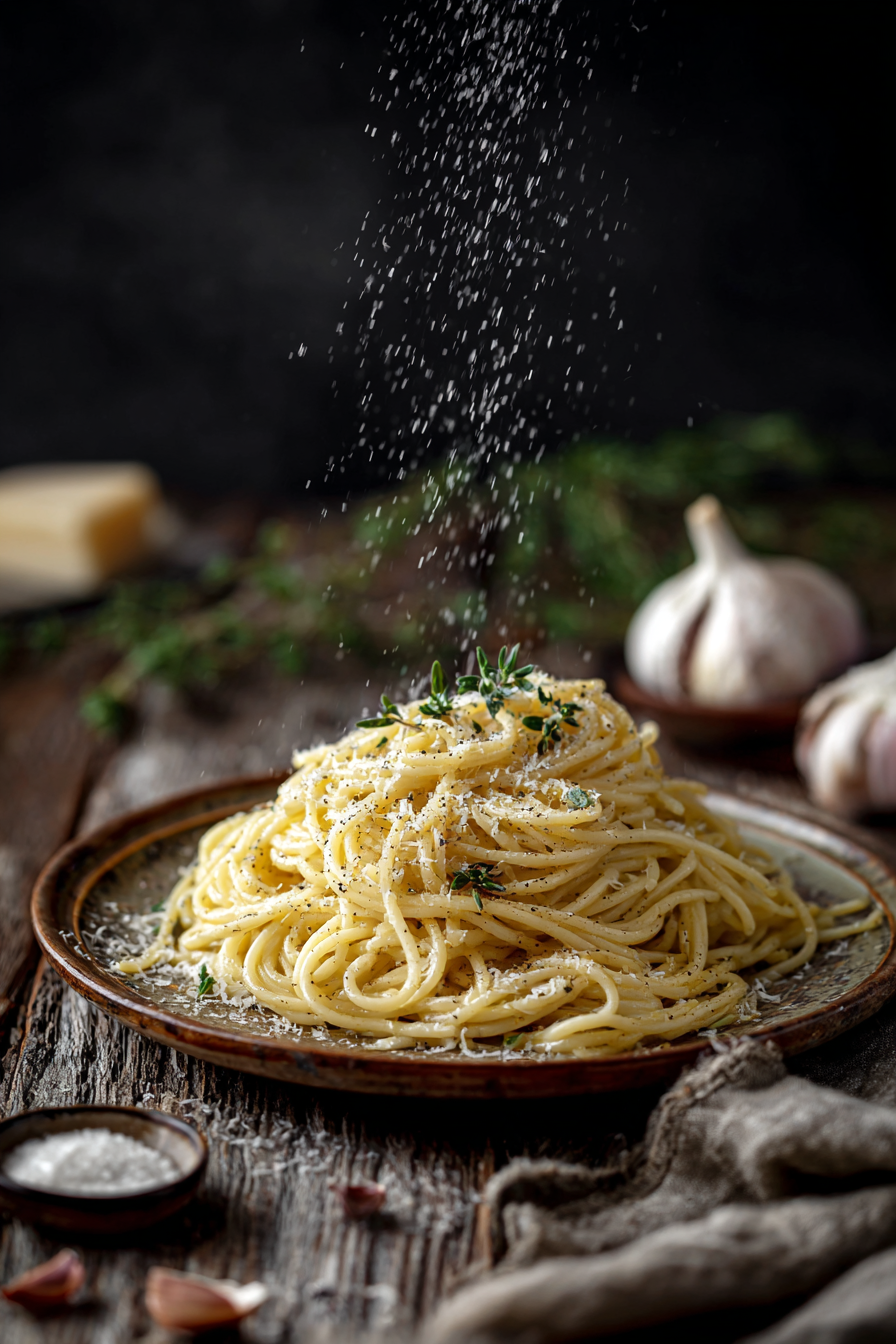
This Cacio e Pepe recipe delivers the classic Roman pasta dish in just 15 minutes using Parmesan instead of traditional Pecorino Romano. The secret lies in timing, temperature control, and using starchy pasta water to create a silky, emulsified sauce that clings to every strand. You’ll get that signature creamy, peppery flavor without hunting for specialty cheese. If you enjoy simple, flavorful pasta dishes, you might also like this Best Lemon Pasta Recipe.
Ingredients
- 12 oz spaghetti or tonnarelli
- 2 tablespoons whole black peppercorns
- 2 cups finely grated Parmigiano-Reggiano cheese (about 6 oz)
- 2 tablespoons unsalted butter (optional, for extra richness)
- Salt for pasta water
Instructions
- Bring a large pot of salted water to a rolling boil. Add the pasta and cook according to package directions until al dente, usually 8-10 minutes. Reserve 2 cups of the starchy pasta water before draining.
- While the pasta cooks, toast the whole black peppercorns in a dry skillet over medium heat for 2-3 minutes until fragrant and lightly smoking. Coarsely crack them using a mortar and pestle or the bottom of a heavy pan.
- In a large mixing bowl or the empty pasta pot, combine the cracked pepper with about 1/2 cup of the reserved pasta water. Let it sit for a minute to bloom the pepper flavor.
- Add the finely grated Parmesan to the bowl and stir vigorously with a wooden spoon or whisk, adding more pasta water a few tablespoons at a time until you have a smooth, creamy sauce the consistency of heavy cream. The mixture should look glossy, not clumpy.
- Transfer the drained pasta directly to the cheese mixture while still steaming hot. Toss constantly and energetically for 1-2 minutes, adding more pasta water as needed to keep the sauce loose and creamy. The residual heat and motion will create a silky emulsion that coats each strand.
- If using butter, add it now and toss until melted and incorporated. The sauce should cling to the pasta without pooling at the bottom of the bowl.
- Serve immediately in warmed bowls, topping each portion with extra grated Parmesan and a generous grind of fresh black pepper.
Notes
- Use the finest grater you have for the Parmesan—a Microplane works best. Pre-shredded cheese contains anti-caking agents that prevent proper emulsification.
- Temperature is critical: the pasta should be steaming hot when it hits the cheese mixture, but the bowl should not be over direct heat or the cheese will seize and turn grainy.
- If the sauce becomes too thick or clumpy, add pasta water one tablespoon at a time while tossing vigorously to bring it back together.
- Leftover pasta water is your best friend here—it contains the starches that make the sauce work, so reserve more than you think you’ll need.
- This dish is best served immediately as the sauce tightens as it cools. Have your diners ready at the table before you start the final toss.
Nutrition
- Array