
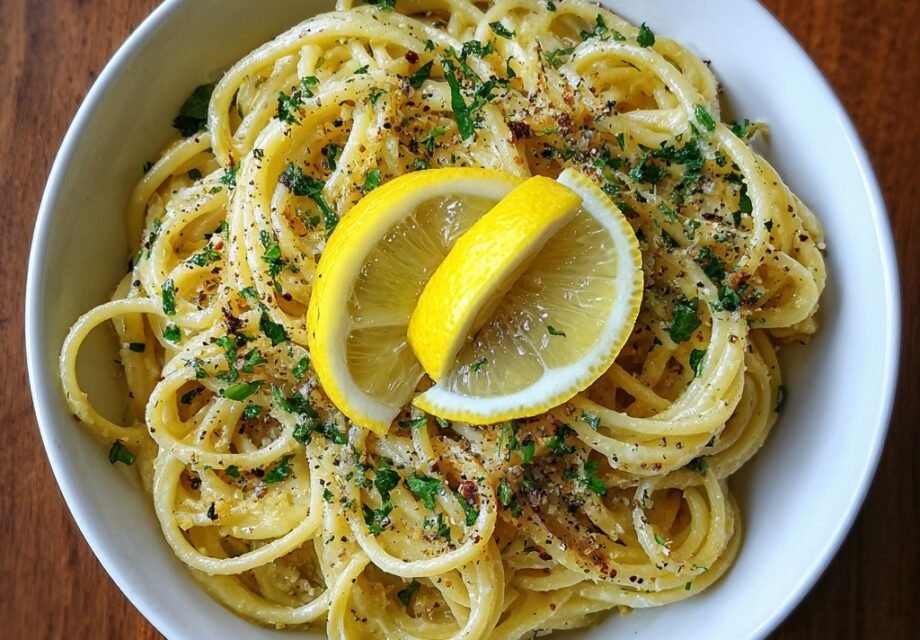
This recipe is a go-to because it’s incredibly quick and relies on ingredients I almost always have on hand. It’s the kind of simple, elegant dish that works just as well for a quiet night in as it does for having friends over, proving that culinary magic often comes from simple combinations. It truly embodies the philosophy that less is more.
- Why You’ll Love This Recipe
- Ingredient Notes
- How to Make Lemon Garlic Pasta
- Tips for Success
- Variations and Add-Ins
- Storage and Reheating
- Serving Suggestions
- Lemon Garlic Pasta FAQ
Why You’ll Love This Recipe

This pasta dish has become a reliable favorite for good reason.
- Ready in 20 Minutes: The sauce comes together in the time it takes to boil the pasta, making it ideal for busy evenings when you crave a home-cooked meal without a long prep time.
- Pantry Ingredients: You just need pasta, butter, garlic, a lemon, and some cheese. This recipe proves you can create something spectacular without a special shopping trip.
- Elegant but Easy: The bright, fresh flavors feel thoughtful and a little bit fancy, even though the effort is minimal. The glossy sauce gives it a luxurious finish that seems far more complex than it is.
- Great as a Base: This recipe is a blank canvas. It’s delicious on its own but also pairs perfectly with shrimp, chicken, or sautéed vegetables, making it incredibly versatile and adaptable to what you have in your fridge.
Ingredient Notes
Since there are so few ingredients, their quality really matters. Each one plays a crucial role.
- Pasta: Long pasta like spaghetti or linguine is classic because the strands get coated beautifully. However, short shapes like fusilli or penne are also great at catching the bits of garlic. Choose a quality bronze-die cut pasta if possible; its rougher texture grips the sauce exceptionally well.
- Unsalted Butter: This forms the rich base of the sauce. Using unsalted butter lets you control the final seasoning. If you only have salted butter, simply reduce the amount of salt you add at the end.
- Garlic: Use fresh garlic cloves. The pre-minced jarred stuff has a harsh flavor that won’t work here. I recommend thinly slicing the cloves rather than mincing them; they infuse the butter with a mellow flavor and are less likely to burn.
- Lemon: You need both the zest and the juice from a fresh lemon. The zest provides aromatic oils, while the juice gives the sauce its signature bright kick. Be sure to zest the lemon before you juice it. For maximum juice, roll the lemon firmly on the countertop before cutting.
- Red Pepper Flakes: This is optional, but a small pinch adds a gentle warmth that balances the richness of the butter without making the dish spicy.
- Parmesan Cheese: A wedge of real Parmigiano-Reggiano grated fresh is a game-changer. Pre-shredded cheeses contain anti-caking agents that prevent them from melting smoothly and can make your sauce grainy. Pecorino Romano is a great substitute if you prefer a saltier, sharper flavor profile.
- Fresh Parsley: Adds a final burst of herbaceous freshness and vibrant color. Flat-leaf (Italian) parsley has a more robust flavor that stands up well to the garlic.
- Reserved Pasta Water: This starchy, salty water is the secret ingredient that creates a creamy, emulsified sauce. It’s the binder that brings the butter and lemon juice together.
How to Make Lemon Garlic Pasta

This dish moves fast, so have all your ingredients prepped and measured before you start cooking. This principle, called *mise en place*, is key to a stress-free experience.
Step 1: Cook the Pasta
Bring a large pot of water to a rolling boil. Salt it generously—it should taste like the sea. This is your only chance to season the pasta itself. Add the pasta and cook according to package directions until al dente, meaning it still has a slight, firm bite. I suggest cooking it for one minute less than the package suggests, as it will cook more in the sauce.
Before draining, use a mug or measuring cup to reserve at least one cup of the starchy cooking water. This is liquid gold, so don’t forget it. If you accidentally drain all the water, a little heavy cream or chicken broth can help, but it won’t be quite the same.
Step 2: Start the Sauce
While the pasta boils, melt the butter in a large skillet over medium heat. The pan should be large enough to hold all the pasta later. Once the butter is melted and foamy, add the sliced garlic and red pepper flakes (if using). Cook, stirring constantly, for 30 to 60 seconds until the garlic is fragrant and pale golden. Be very careful not to let it brown, as it will become bitter.
Step 3: Add the Lemon
Reduce the heat to low to prevent the garlic from overcooking. Add the lemon zest and fresh lemon juice to the skillet. Stir for a few seconds to combine. This step stops the garlic from cooking further while building the primary flavor of the sauce.
Step 4: Combine Pasta and Sauce
Using tongs, transfer the cooked pasta directly from the pot into the skillet. A little water clinging to the noodles is fine. Add about 1/4 cup of the reserved pasta water to the skillet to start.
Toss everything together vigorously. This agitation is key. As you toss, the starch from the pasta water helps the fat from the butter and the water from the lemon juice bind together, creating a light, glossy sauce that coats every strand.
If the sauce looks too thick, add more reserved pasta water, one tablespoon at a time, until it reaches a silky consistency. The perfect sauce should pool slightly at the bottom of the pan but still cling to the noodles.
Step 5: Finish and Serve
Remove the skillet from the heat. This is an important step to prevent the cheese from becoming clumpy. Add the freshly grated Parmesan and chopped parsley. Toss one final time until the cheese is completely melted and everything is beautifully combined.
Taste and adjust seasoning with salt and black pepper as needed. The pasta water is salty, so you may not need much. Serve immediately in warm bowls, with an extra sprinkle of Parmesan and parsley on top.
Tips for Success

A few simple techniques make all the difference in this dish.
- Undercook the Pasta Slightly: Always pull the pasta from the water when it still has a firm bite. It will finish cooking in the pan for the last minute, absorbing the sauce’s flavors. This is the difference between perfectly cooked pasta and mushy pasta.
- Watch the Garlic: This is the most delicate step. Burnt garlic will ruin the dish. Keep the heat moderate and your eyes on the pan. The moment it becomes fragrant, proceed to the next step.
- Don’t Skip the Pasta Water: Seriously, it’s non-negotiable. This starchy water is the key emulsifier that transforms butter and lemon juice into a creamy sauce without any cream. It’s a classic Italian technique used in dishes like Cacio e Pepe.
- Use Freshly Grated Cheese: It melts seamlessly for a smooth, creamy texture. The anti-caking agents in pre-bagged cheese can result in a gritty sauce. The flavor of a fresh block is also vastly superior.
- Toss Vigorously Off the Heat: The final combination of pasta, sauce, and cheese should happen away from direct heat. This allows the cheese to melt gently from the residual heat, ensuring a smooth sauce.
Variations and Add-Ins
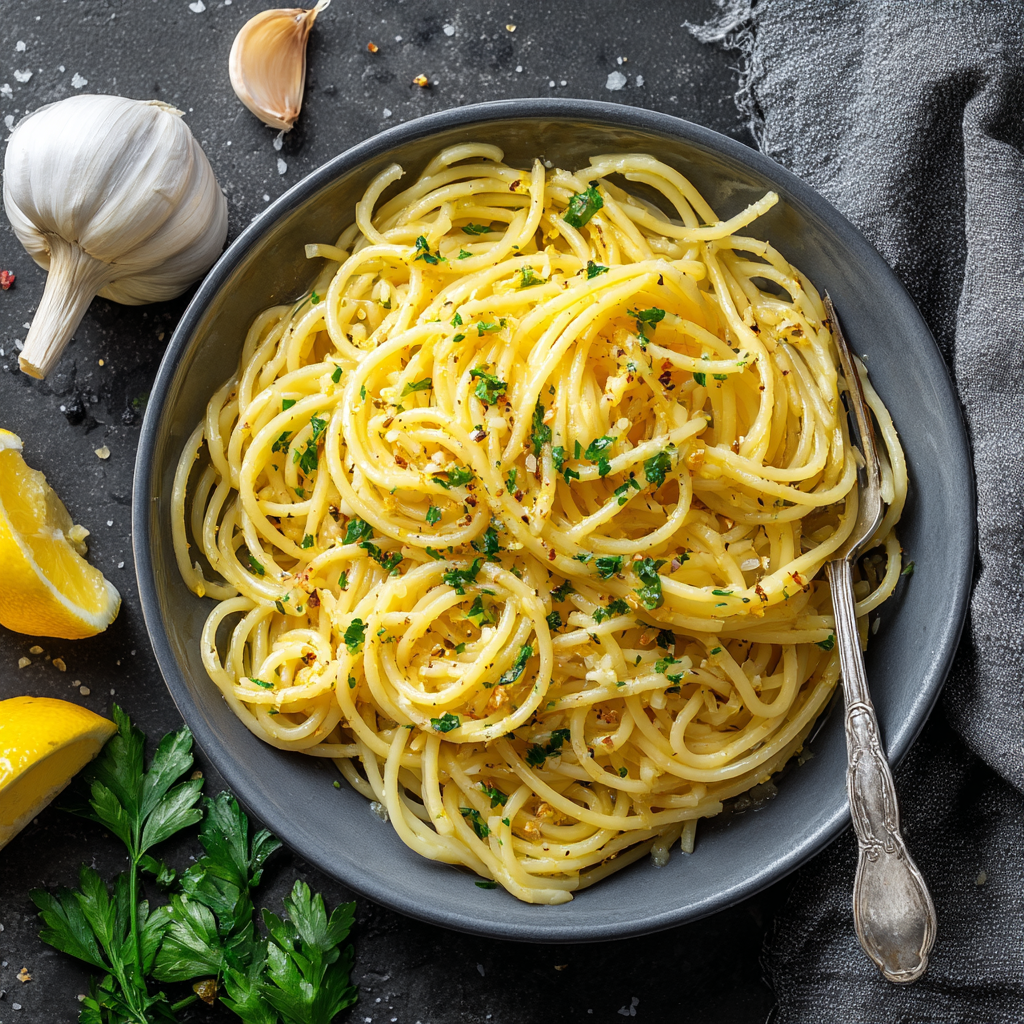
This recipe is a wonderful starting point. Here are a few ways to build on it.
Lemon Garlic Shrimp Pasta
This is a popular way to turn this dish into a complete meal.
- Season 1 pound of peeled and deveined large shrimp with salt and pepper.
- After cooking the garlic for 30 seconds, push it to the side and add the shrimp in a single layer. Cook for 1-2 minutes per side, just until pink.
- Remove the shrimp and set them aside. Proceed with making the sauce as directed, then add the cooked shrimp back in at the end with the Parmesan and parsley.
Other Add-Ins
- Chicken: Toss in shredded rotisserie chicken for a fast protein boost. Alternatively, pan-sear a thinly sliced chicken breast in the skillet before you start the sauce and add it back at the end.
- Vegetables: This pasta is great for vegetables. Add quick-cooking greens like spinach or arugula at the end to wilt. Blanched asparagus, peas, sautéed mushrooms, or blistered cherry tomatoes are also fantastic additions.
- Make it Creamy: For a richer sauce, stir in a few tablespoons of heavy cream or mascarpone cheese along with the first splash of pasta water. This creates a creamier sauce with the same bright lemon-garlic backbone.
- Add a Crunchy Topping: Garnish with toasted breadcrumbs (panko is excellent) or toasted pine nuts for a wonderful textural contrast. To make herbed breadcrumbs, toast them in a dry skillet with a little olive oil and garlic powder until golden.
Storage and Reheating
This pasta is best enjoyed immediately. However, leftovers can still be great if handled properly.
To Store: Let the pasta cool completely, then transfer it to an airtight container. It can be stored in the refrigerator for up to 3 days. The sauce will congeal as it chills.
To Reheat: The key to reviving leftovers is to reintroduce moisture. The best method is in a nonstick skillet over low heat. Add the leftover pasta and a splash of water or chicken broth to the pan. Stir gently until the pasta is warmed through and the sauce becomes creamy again. I avoid the microwave, as it heats unevenly and can make the sauce oily.
Serving Suggestions
This dish is versatile and pairs well with many things.
- A Simple Green Salad: A crisp salad of arugula with a sharp lemon vinaigrette is a perfect, fresh counterpoint.
- Crusty Bread: A good loaf of ciabatta or a baguette is essential for sopping up any delicious sauce left in the bowl.
- Roasted Vegetables: A side of simple roasted vegetables adds color and nutrients. Roasted broccoli or asparagus works well.
- Protein: If not adding protein directly to the pasta, it serves as a wonderful side for grilled chicken, pan-seared scallops, or a simple piece of baked salmon.
Lemon Garlic Pasta FAQ
Can I use bottled lemon juice?
I strongly recommend using a fresh lemon. Bottled lemon juice has a duller flavor, and more importantly, you miss out on the essential oils from the zest, which add a huge amount of aroma and flavor.
My sauce is oily, not creamy. What happened?
This usually means the sauce “broke” or didn’t emulsify. Common culprits include the heat being too high when you added the cheese, not using enough starchy pasta water, or not tossing the pasta and sauce together vigorously enough.
Can this be made gluten-free?
Yes, absolutely. Use your favorite gluten-free pasta and cook it according to package instructions. Be sure to save the gluten-free pasta water, as it’s just as important for creating a creamy sauce.
Can I make this recipe vegan?
Yes, with a few swaps. Use a high-quality vegan butter instead of dairy butter. For the cheese, substitute with a grated vegan Parmesan or a few tablespoons of nutritional yeast to add a savory, cheesy flavor. The core technique remains the same.
This simple **lemon garlic pasta** proves you don’t need a long list of ingredients to create a delicious and satisfying meal. It’s a reliable recipe that celebrates simplicity and fresh flavors. I hope it becomes a favorite in your kitchen.
If you make this dish, feel free to leave a comment below to let me know how you liked it!
PrintLemon Garlic Pasta: A 20-Minute Irresistible Dish
- Prep Time: 10
- Cook Time: 10
- Total Time: 20
- Yield: 4–6 servings 1x
- Category: Main Course
- Method: Stovetop, Boiling
- Cuisine: Italian-American
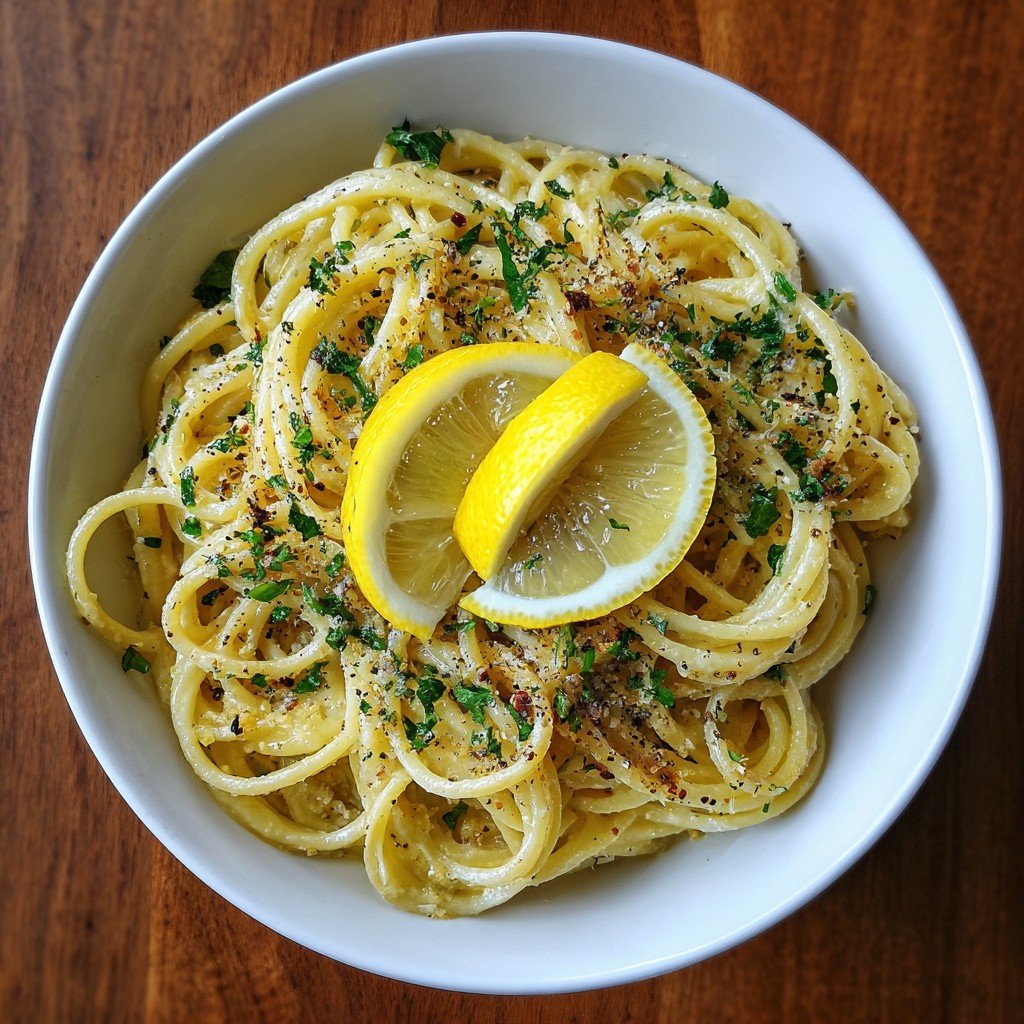
Description
This bright and buttery lemon garlic pasta is a perfect weeknight dinner, ready in about 20 minutes. A simple yet elegant sauce is made with pantry staples like garlic, lemon, butter, and Parmesan cheese. The bright acidity of the lemon cuts through the rich butter and garlic, creating a sauce that is both light and deeply flavorful. This fast and satisfying meal feels special without any of the fuss.
Ingredients
- 1 lb (450 g) spaghetti or linguine
- 1/2 cup (113 g) unsalted butter
- 6 cloves garlic, minced
- 1 large lemon, zested and juiced
- 1 cup freshly grated Parmesan cheese, plus more for serving
- 1/2 cup reserved pasta water
- 1/4 cup chopped fresh parsley
- 1/2 teaspoon red pepper flakes (optional)
- Salt and freshly ground black pepper to taste
Instructions
- Cook the pasta in a large pot of generously salted boiling water according to package directions until al dente. Just before draining, reserve about 1 cup of the starchy pasta water. Drain the pasta.
- While the pasta is cooking, melt the butter in a large skillet or pan over medium heat. Add the minced garlic and red pepper flakes (if using) and cook for about 1-2 minutes until fragrant. Be careful not to let the garlic burn.
- Remove the skillet from the heat. Stir in the lemon zest and lemon juice.
- Add the drained pasta directly to the skillet with the garlic butter sauce. Add the grated Parmesan cheese and 1/2 cup of the reserved pasta water.
- Toss everything together continuously over low heat until the butter, cheese, and pasta water emulsify into a creamy, glossy sauce that coats the pasta. If the sauce is too thick, add more reserved pasta water a tablespoon at a time.
- Season with salt and pepper to taste. Stir in the fresh parsley, serve immediately, and top with additional Parmesan cheese if desired.
Notes
- For the best flavor, use high-quality ingredients like fresh garlic, a fresh lemon, and a block of Parmesan cheese that you grate yourself.
- This pasta is a wonderful base for additions. Feel free to add cooked shrimp, grilled chicken, or sautéed vegetables like asparagus or spinach.
- Do not skip reserving the pasta water. The starch in the water is essential for creating a smooth, creamy sauce that clings to the pasta.
Nutrition
- Array
[…] Lemon Garlic Pasta […]
[…] brightening chili, these **pickled red onions** are a secret weapon. They’re also fantastic with lemon garlic pasta or any hearty pasta […]