Description
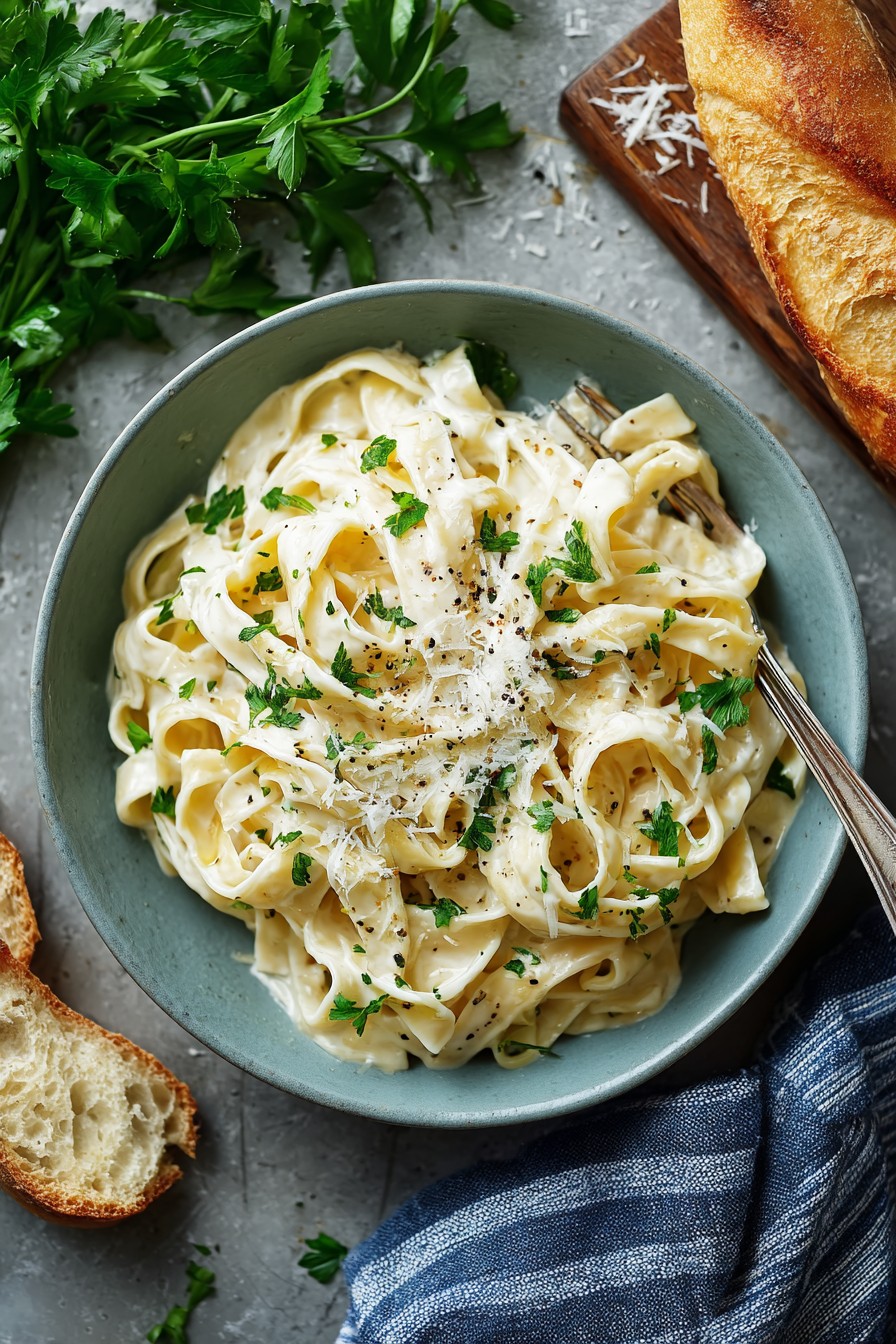
Traditional Fettuccine Alfredo is a classic Roman pasta dish made with just three simple ingredients: fresh fettuccine, butter, and Parmigiano-Reggiano cheese. This authentic recipe relies on proper emulsification technique rather than cream to create a silky, glossy sauce that clings beautifully to every strand. Ready in about 30 minutes, this dish delivers the same luxurious results that made Alfredo di Lelio’s restaurant famous over a century ago. For more classic Italian dishes, explore our Pasta Recipes collection.
Ingredients
- 1 pound fresh fettuccine pasta
- 8 ounces unsalted butter, cut into cubes and softened
- 6 ounces Parmigiano-Reggiano cheese, finely grated
- 1 teaspoon fine sea salt, plus more for pasta water
- Freshly cracked black pepper, to taste
Instructions
- Bring a large pot of generously salted water to a rolling boil over high heat, using about 1 tablespoon of salt per quart of water.
- While waiting for the water, place the softened butter cubes in a large warmed serving bowl and add the finely grated Parmigiano-Reggiano on top.
- Cook the fresh fettuccine in the boiling water according to package directions until al dente, typically 2 to 3 minutes for fresh pasta; reserve 1 cup of starchy pasta water before draining.
- Working quickly, transfer the hot drained pasta directly onto the butter and cheese mixture in the warmed bowl.
- Immediately begin tossing the pasta vigorously with tongs or two forks, adding splashes of reserved pasta water as needed to help emulsify the sauce into a smooth, glossy coating.
- Continue tossing for 1 to 2 minutes until every strand is evenly coated with a creamy, silky sauce that clings without pooling at the bottom.
- Season with fine sea salt and freshly cracked black pepper to taste, then serve immediately while still hot.
Notes
- Use authentic Parmigiano-Reggiano cheese for the best flavor and melting properties; pre-grated cheese contains anti-caking agents that prevent smooth emulsification.
- Fresh fettuccine works best because it releases more starch and has a tender texture that pairs perfectly with the sauce.
- Warm your serving bowl by filling it with hot water while the pasta cooks, then dry it before adding butter and cheese.
- The sauce should look glossy and coat the pasta evenly; if it appears greasy or broken, add more pasta water and toss vigorously.
- Serve immediately as the sauce will thicken and become less silky as it cools.
Nutrition
- Array