
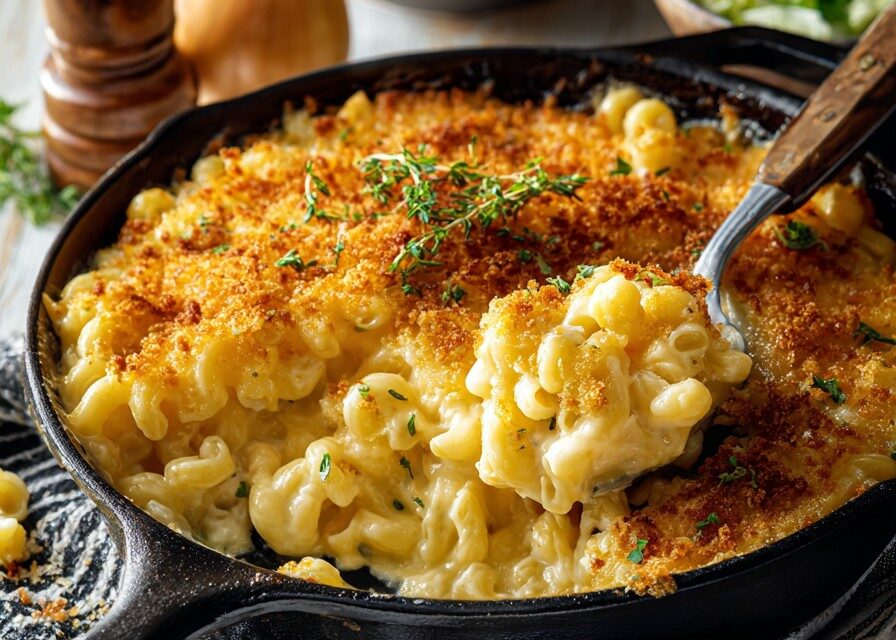
The Secret That Makes This Recipe Foolproof
I’ve made more failures of mac and cheese than I care to count — sauces that split, tops that burned, noodles that went soggy. The trick that fixed them all was controlling water and heat. Slightly undercooked pasta is key; it finishes in the oven, absorbing flavor instead of swimming in it. A quick stovetop base made with warm milk and freshly shredded cheese builds a sauce that hugs each noodle instead of sliding off. Lastly, a higher bake (400°F) gives contrast: bubbling edges, creamy center, crisp top. That heat makes the cheese emulsify and the breadcrumbs toast before the pasta dries out.
Once you’ve tasted the texture of properly baked mac, that light crackle under your spoon, it’s hard to go back. Let’s get you there — no stress, no guesswork.
Why You’ll Love This Baked Mac and Cheese
- Silky, cheese-laced sauce that clings to every curve of the pasta.
- Browned top that crunches just enough with every spoonful.
- Quick enough for weekday dinners; indulgent enough for weekends.
- Takes well to add-ins like cooked bacon, caramelized onions, or spinach without losing structure.
- Scales easily for gatherings — double the batch, just bake a few minutes longer.
What You’ll Need
Pasta Base
- Elbow macaroni – the classic shape. The elbows trap sauce beautifully. I sometimes use cavatappi when I want a bit more chew.
- Heavily salted water – don’t hold back here; a tablespoon of salt per quart teaches the pasta flavor before it ever meets cheese.
Cheese Blend
- Sharp cheddar – the backbone of flavor. Grate it yourself; pre-shredded is coated in starch that makes sauces gritty.
- Monterey Jack or mozzarella – adds mild meltability and creaminess. Cheddar gives taste; Jack smooths the texture.
- Parmesan – a small handful goes a long way. I reach for it every time because it sharpens the balance and keeps richness in check.
Sauce & Binding
- Butter – builds the roux and gives depth unmatched by oil.
- All-purpose flour – one tablespoon per tablespoon of butter creates structure. It thickens without heaviness if cooked just a minute.
- Whole milk – higher fat prevents a chalky sauce. Skim or low-fat will thin out and separate under heat.
- Heavy cream – optional, but a couple tablespoons make a sauce that feels almost custardy.
- Ground mustard – invisible in taste but crucial; it wakes the cheese up.
- Paprika – for color, and it echoes the warmth of the crust.
Topping
- Breadcrumbs – plain or panko, both work. Crushed crackers or stale baguette pieces add rustic crunch.
- Melted butter – binds the crumbs so they toast evenly instead of flying off the top dry.
How to Make Baked Mac and Cheese


Prep: Cook the Pasta
- Step 1: Boil the pasta. Bring a large pot of salted water to a rolling boil. Add macaroni and cook until just underdone — about one minute shorter than box directions. It should still have a tiny bite.
- Step 2: Drain and cool slightly. Drain well, toss with a teaspoon of butter, and set aside. This little fat coating keeps the noodles from sticking while the sauce cooks.
Build the Sauce
- Step 3: Make the roux. Melt 3 tablespoons butter in a saucepan over medium heat. Once it foams, whisk in 3 tablespoons flour. Stir for exactly 60 seconds until it smells slightly nutty but stays pale. Don’t let it brown — that will shift the flavor from creamy to toasted.
- Step 4: Add warm milk gradually. Pour in 2 cups of milk a little at a time, whisking constantly. The first few additions will seize the roux—keep whisking until smooth. After 5 minutes, it should coat the back of a spoon; when you draw a finger through, the line should stay clear.
- Step 5: Melt in cheeses. Lower heat. Add cheddar, Jack, and Parmesan by handfuls, stirring after each until smooth. Turn off the heat before the last addition; residual warmth finishes melting without breaking the sauce. Season with salt, pepper, mustard, and paprika.
Combine & Bake
- Step 6: Mix pasta and sauce. Fold drained pasta into the sauce until each piece is coated. If it looks slightly loose, that’s perfect — the oven thickens it.
- Step 7: Assemble. Pour mixture into a greased 2-quart baking dish. Stir breadcrumbs with melted butter and scatter on top in an even layer.
- Step 8: Bake. Bake at 400°F for 15–20 minutes, until bubbling around the edges and the top turns golden brown. If it darkens too fast, cover loosely with foil for the final minutes.
- Step 9: Rest before scooping. Let it sit for 5 minutes. The cheese settles, the sauce thickens, and you get those creamy yet structured bites.
Making the Cheese Sauce Ahead
The sauce can be prepared up to two days ahead. Once cooked, cool it quickly, then store in an airtight container in the fridge. Before using, reheat gently over low heat with a splash of milk while stirring. Freezing the sauce alone isn’t worth it — dairy can split after thawing. But chilled sauce fits easily into dinner prep: boil pasta, combine, bake, done.

How to Serve It
Serve this baked mac and cheese piping hot, straight from the dish, with a spoon that scrapes through soft and crisp layers at once. I like a dusting of fresh parsley and a light pinch of smoked paprika on top for aroma. It pairs beautifully with roasted vegetables or a crisp green salad. A dry white wine cuts through the richness if you’re serving adults. For family dinners, a glass of milk or ginger ale keeps it classic.
If it sits out longer than 30 minutes, the top stays crunchy but the interior thickens slightly — that’s normal. A quick stir revives creaminess.
Storage and Reheating
Fridge: Cool fully, then store in a covered glass container for up to 4 days. Avoid sealing it hot — steam will soften the crust.
Freezer: Lasts up to 2 months. Expect a small loss in creaminess but flavor stays strong. Wrap it tightly to prevent freezer burn.
Reheating: Add 1–2 tablespoons milk before warming. Reheat covered in a 350°F oven for 15 minutes or in the microwave at medium power. If possible, store breadcrumbs separately and sprinkle after reheating to keep the crunch.
FAQ
Can I make this ahead of time?
Yes. Assemble it fully but don’t bake. Cover and refrigerate up to 24 hours. Add 5 extra minutes to the bake time since it starts cold.
What’s the best cheese blend?
Sharp cheddar for flavor plus a soft melter like Monterey Jack or Gruyère gives the smoothest, most balanced result. Straight cheddar tends to separate under heat.
Why did my sauce turn grainy?
Overheating or using pre-shredded cheese. Always lower the heat before melting cheese and use finely grated blocks for a silky sauce.
Can I skip the breadcrumb topping?
You can, but the texture contrast is what makes this dish special. Try crushed crackers or toasted panko if you want less breadiness.
For more on this topic, check out Tomato Soup And Grilled Cheese Casserole, Greek Chicken Orzo Bake and Johnny Marzetti Casserole Surefire Treat.
Related Recipes
- Tomato Soup and Grilled Cheese Casserole
- Greek Chicken Orzo Bake
- Johnny Marzetti Casserole
Baked Mac and Cheese in 30 Minutes
- Prep Time: 10
- Cook Time: 30
- Total Time: 40
- Yield: 6 servings 1x
- Category: Main Course
- Method: Baking, Stovetop
- Cuisine: American
- Diet: Vegetarian
Description
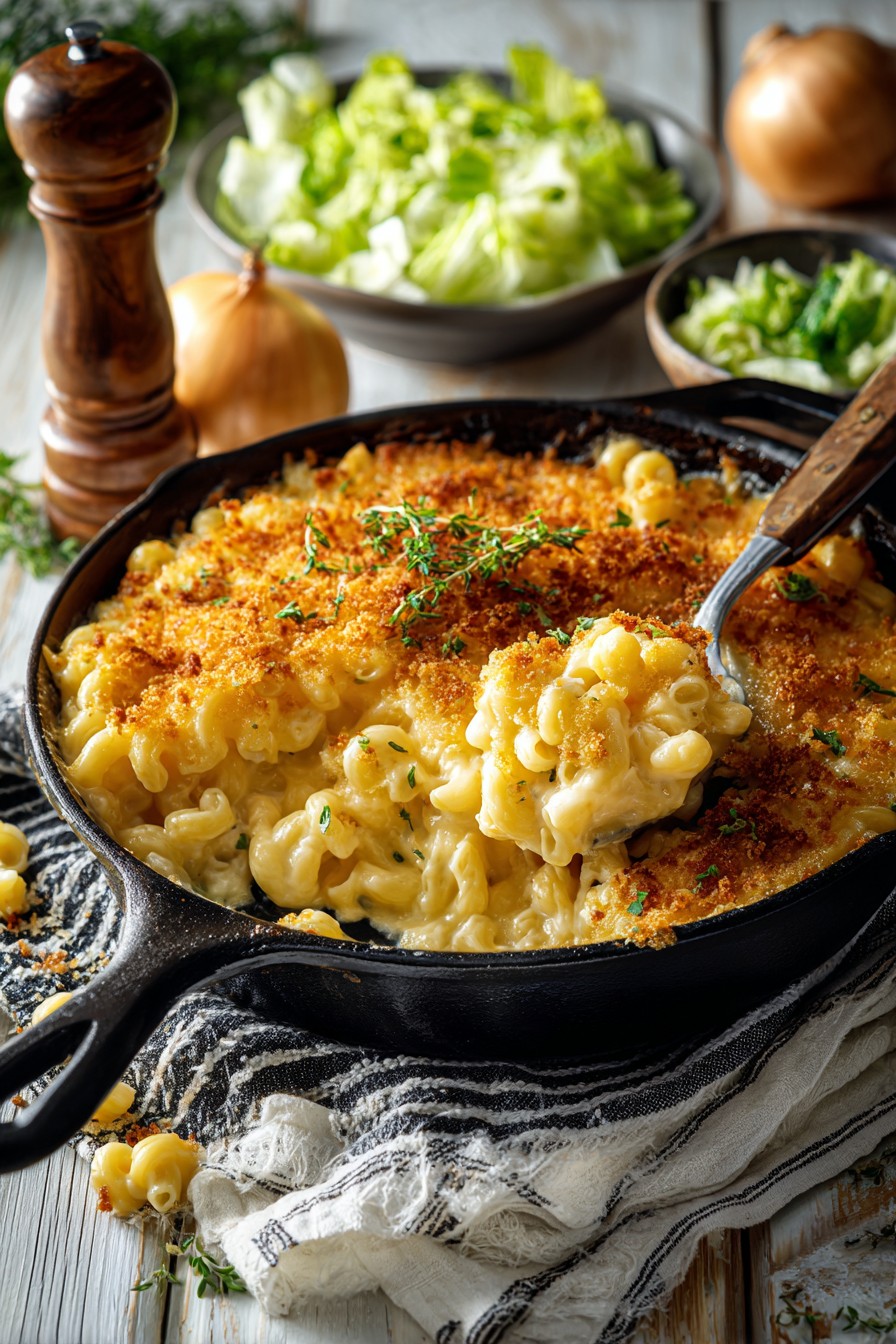
This baked mac and cheese is creamy inside with a golden, crisp top that shatters lightly under a spoon. A quick stovetop cheese sauce coats every piece of pasta before baking to perfection in just 30 minutes. Ideal for weeknights or gatherings, it balances indulgence with simplicity. The result is a cozy, crowd-pleasing dish that delivers both comfort and texture.
Ingredients
- 12 oz elbow macaroni (or cavatappi, slightly undercooked by 1 minute)
- 1 tbsp kosher salt (for the pasta water)
- 3 tbsp unsalted butter (plus extra for greasing the dish)
- 3 tbsp all-purpose flour (for thickening the sauce)
- 2 cups whole milk (warm)
- 1 cup heavy cream (optional, for extra richness)
- 2 cups sharp cheddar cheese, freshly shredded
- 1 cup Monterey Jack cheese, freshly shredded
- 1/2 cup grated Parmesan cheese
- 1/2 tsp ground black pepper
- 1/4 tsp paprika (optional, for color)
- 1/2 cup panko breadcrumbs (for topping)
- 1 tbsp melted butter (to mix with breadcrumbs)
Instructions
- Preheat the oven: Set oven to 400°F (200°C) and lightly butter a 9×13-inch baking dish.
- Boil the pasta: Bring a large pot of water to a rolling boil. Add salt and pasta; cook 1 minute less than package directions until slightly firm. Drain and set aside.
- Make the roux: In a medium saucepan over medium heat, melt butter until foamy (about 1 minute). Whisk in flour and cook 1 minute until lightly golden and nutty aroma develops.
- Add milk and cream: Slowly pour in warm milk and cream while whisking constantly. Cook 4–5 minutes until thick enough to coat the back of a spoon.
- Add cheeses: Lower heat to medium-low and add cheddar, Monterey Jack, and Parmesan gradually. Stir until melted and smooth, about 2 minutes.
- Season the sauce: Stir in pepper and paprika. Taste and adjust salt if needed.
- Combine pasta and sauce: Add cooked pasta to the cheese sauce, stirring until every noodle is evenly coated and glossy.
- Prepare topping: In a small bowl, mix panko breadcrumbs with melted butter until evenly moistened.
- Assemble: Pour mac and cheese mixture into the prepared baking dish. Spread evenly and sprinkle breadcrumb mixture on top.
- Bake: Place dish on the center rack and bake for 15 minutes at 400°F, until top is golden brown and sauce bubbles around edges.
- Cool slightly: Let rest 5 minutes before serving so the cheese sets slightly but stays creamy inside.
Notes
- Substitutions: Use Gruyère or fontina instead of Monterey Jack for a bolder flavor.
- Make ahead: Assemble the dish up to 1 day before baking. Refrigerate covered; bake uncovered an extra 5 minutes.
- Storage: Store leftovers in an airtight container in the refrigerator for up to 3 days.
- Reheating: Reheat in a 350°F oven for 15 minutes or microwave individual portions for 90 seconds, adding a splash of milk to restore creaminess.
- Serving suggestions: Pair with a crisp green salad or roasted vegetables for a balanced meal.
Nutrition
- Array