
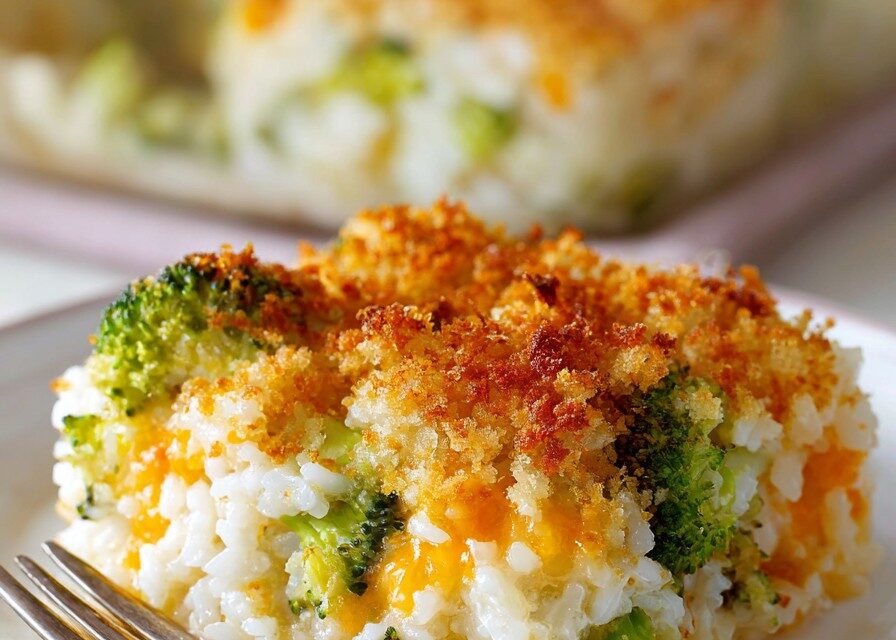
What Makes This Casserole Worth Making
Every cook has a version of this dish. The difference here is pacing — cooking each element just enough so it tastes fresh when it leaves the oven. The rice stays fluffy because it’s fully cooked before mixing. The broccoli tastes like broccoli, not mush, because it’s blanched fast and shocked cold. And the sauce is pourable, letting creaminess surround each grain before baking.
The key is restraint: don’t overload the pan. A single, even layer bakes evenly and browns instead of steaming. The same principle helps other casseroles like the slow cooker cowboy casserole. Let’s get practical.
Why You’ll Love This Broccoli Rice Casserole
- Top bakes into a buttery crust while the center stays soft and creamy.
- Great for make-ahead meals — minimal last-minute work.
- Uses frozen broccoli and leftover rice with perfect texture.
- The sauce tastes homemade even with canned soup.
- Turns pantry basics into a dish that feels special.
- Crowd-friendly, ideal for potlucks or family dinners.
- Adapts easily for vegetarians by using vegetable broth and omitting meat.
- Budget‑friendly and freezer‑friendly — stretches simple ingredients without compromise.


What You’ll Need
Rice and Base
- Cooked long‑grain rice: Keeps the casserole fluffy. Leftover rice works well; spread it to cool for a few minutes to release steam and prevent sogginess. Brown rice or jasmine rice can be substituted, though brown rice adds a chewier texture and slightly nutty note.
- Cream of mushroom or chicken soup: The creamy binder that thickens in the oven. Taste and adjust salt if using low‑sodium versions. If you prefer homemade control, try the scratch cheese sauce version below.
- Broth or milk: Loosens the sauce. Milk gives richness; broth adds savor. Choose based on whether it’s a main or side dish. If using nondairy milk, pick unsweetened almond or oat varieties that won’t overpower the cheese.
- Optional cooked protein: About a cup of shredded chicken, turkey, or ham turns it into a full meal without altering bake time. Diced rotisserie chicken makes a convenient addition.
- Optional add‑ins: A handful of chopped spinach, cooked peas, or leftover roasted vegetables can enhance color and nutrition without changing consistency.
Vegetables and Aromatics
- Broccoli florets: Choose small, even pieces. Blanch two minutes, then ice bath and dry well. If using frozen, thaw slightly before blanching so florets separate. Avoid overcooking — bright green color signals perfect doneness.
- Onion and garlic: Sauté briefly for sweetness and balanced flavor. Add a pinch of thyme or red pepper if you like. Finely diced celery or shallots can also layer flavor.
- Butter: Adds richness and helps flavor absorb. A dab brushed on top enhances gloss and color. Substitute olive oil to make the dish a little lighter.
Cheese and Seasoning
- Sharp cheddar: Melts beautifully and stays flavorful. Shred fresh from a block for best texture. Pre‑shredded versions often contain anti‑caking agents that affect melting.
- Salt and black pepper: Season as you cook, not just at the end. Kosher salt gives easy control and consistent flavor.
- Paprika: Adds warmth and pretty color. Smoked paprika brings a deeper tone. A hint of cayenne can introduce subtle contrast for heat lovers.
- Optional Parmesan or Gruyère: Stir a few tablespoons through the filling or sprinkle on top for extra savoriness.
Topping
- Breadcrumbs or crushed crackers: Provide crunch. Mix in Parmesan or fried onions if desired. Panko breadcrumbs give a lighter, crispier crust.
- Melted butter: Ensures a golden crust. Brown it slightly for nutty aroma and deeper tone. For a vegetarian topping, use melted ghee or vegan butter.
- Herbs for garnish: Minced parsley, dill, or chives add freshness just before serving.
How to Make Broccoli Rice Casserole

Prep and Blanch
- Step 1: Preheat oven to 350°F (175°C). Grease a 9×13‑inch dish. Ceramic or glass holds heat evenly. Allow some space at the top so the casserole can bubble without overflowing.
- Step 2: Blanch broccoli in salted boiling water for two minutes, then chill in ice water. Drain and dry completely to prevent watery casserole. Pat lightly with paper towels or spin briefly in a salad spinner.
- Step 3: Sauté onion and garlic in two tablespoons butter until translucent, about three minutes. Let cool slightly before mixing into other ingredients. This step builds a gentle base flavor for the whole dish.
Build the Filling
- Step 4: In a large bowl, combine rice, broccoli, onion‑garlic mix, soup, and half the cheese. Stir gently to keep rice separate. Be cautious not to mash broccoli florets; visible pieces make the dish attractive.
- Step 5: Add milk or broth a few tablespoons at a time until creamy and spoonable. It should hold shape but not dry out. Look for a mixture that feels moist but not soupy — it will set as it bakes.
- Tip: Taste the mix before baking to ensure proper seasoning. Once baked, adjustments are harder to make.
Bake and Crisp
- Step 6: Spread mixture evenly in the dish. Sprinkle remaining cheese on top. Combine breadcrumbs with butter and scatter in an even layer. Press lightly with fingers or the back of a spoon so crumbs adhere.
- Step 7: Bake 25–30 minutes until bubbling and golden. Rotate halfway through for even color. If browning too fast, cover loosely with foil.
- Step 8: Rest five minutes before serving so it holds shape yet stays creamy inside. During this time, the sauce thickens and structure stabilizes for neat slices.
The same layering principle works in recipes like tomato soup and grilled cheese casserole — moisture control and balanced bake time create great texture contrast.
Making the Cheese Sauce (Scratch Version)
To skip canned soup, melt three tablespoons butter over medium heat. Whisk in three tablespoons flour for a minute until nutty. Gradually add two cups warm milk, whisking until smooth and thick. Off heat, stir in 1½ cups grated cheddar. Sauce should coat a spoon evenly. Cool slightly before combining with rice so broccoli stays bright. Refrigerate up to three days and warm gently before using.
For variation, swap half the milk with broth or add a teaspoon Dijon mustard. A pinch of nutmeg adds gentle warmth. If it separates, whisk in a splash of hot milk to restore creaminess. You can also make a lighter sauce by adding a few tablespoons of Greek yogurt after cooling — it creates tang while maintaining silkiness.
This scratch version delivers full control over salt and texture, ideal for anyone avoiding processed soups. Try doubling it for lasagnas or creamy vegetable bakes; it freezes well in small containers for future meals.
Troubleshooting Common Issues
- Watery casserole: Usually from wet broccoli or too much liquid. Dry ingredients well and use less milk next time. It’s safer to start with less liquid and add if needed.
- Grainy sauce: Heat was too high when adding cheese. Always remove from burner before stirring cheese in. Stir slowly until glossy.
- Pale top: Move dish to upper rack for last five minutes or broil briefly, watching closely. A quick broil adds appealing color.
- Dry texture: Mix in a few tablespoons milk before baking next time or spoon warm sauce over slices. A drizzle of cream before reheating restores moisture.
- Uneven bake: Confirm the oven preheats fully and use the center rack. Glass dishes absorb heat differently from metal pans, so adjust time slightly if needed.
- Bland flavor: Cheese variety plays the biggest role. Use sharp cheddar or a blend including Gruyère or aged white cheddar for fuller taste.
How to Serve It
Serve straight from the baking dish while hot. Finish with a sprinkle of paprika or parsley for color. It pairs beautifully with roast chicken or a crisp salad. The texture stays creamy for about 30 minutes, then firms up for easy slicing — great for leftovers or lunch boxes. You can even cut it into neat squares for buffets. It’s comfort food that feels homemade without effort, like the classic Johnny Marzetti casserole.
Leftovers can also become a quick brunch dish: top individual portions with a poached egg or a spoonful of salsa for new flavor. Serve alongside roasted carrots or glazed ham for holiday dinners, or with a crisp green salad on weeknights.
Storage and Reheating
- Fridge: Store in an airtight container up to four days. Let cool before covering to preserve topping texture. Keep portions small so they reheat evenly.
- Freezer: Wrap portions tightly in plastic and foil for up to two months. Thaw overnight before reheating. Label with date to track freshness.
- Reheating: Bake covered at 350°F for about 20 minutes or microwave in short bursts. Add a splash of milk for moisture and uncover for the last few minutes to re‑crisp the top.
- Tip: For best crunch after freezing, store topping separately and add fresh buttered crumbs before reheating. You can also toast leftover casserole pieces in a skillet for a crisp bottom edge.
FAQ
Q1: Can I make Broccoli Rice Casserole ahead?
Yes. Assemble, cover, and refrigerate up to a day ahead. Add five minutes to the baking time when cooking from chilled. If freezing, add topping only before baking.
Q2: Can I use frozen broccoli straight from the bag?
Blanch first as with fresh. Skipping that step creates excess moisture the oven can’t evaporate, leading to a soggy texture.
Q3: How do I keep it from tasting bland?
Season every layer — blanching water, filling, and top. Use sharp cheddar for stronger flavor and finish with a pinch of salt before serving if needed.
Q4: Can I change the cheese?
Yes, try Gruyère, Monterey Jack, or half Parmesan blend. Avoid mozzarella alone; it melts but lacks flavor depth. Combining two cheeses often yields the richest result.